July 30, 2026
What Is a Kemono Fursuit?
By Casey Wren
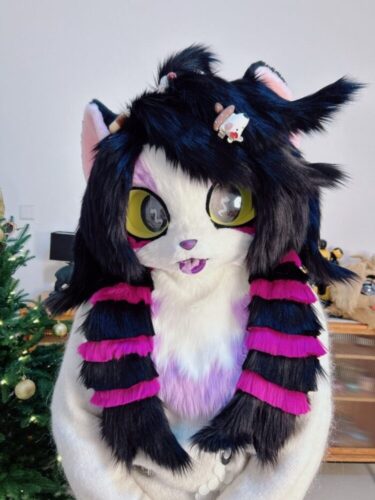
A kemono fursuit is a style of fursuit inspired by Japanese anime and manga. The word “kemono” comes from the Japanese term for beast or animal. In the furry fandom, it refers to a specific look: oversized dome eyes, a short rounded muzzle, soft facial curves, and a compact head shape that looks more like a plush character than a real animal.
If you have seen fursuit photos where the head looks like it stepped out of an anime show rather than a nature documentary, that was probably kemono style. It has become one of the fastest growing fursuit trends worldwide, especially among newer members of the furry community who grew up watching anime. We have noticed more reference sheets coming through our quote form with kemono influenced features over the past year, even from customers who ultimately want a western toony build. The style is clearly crossing over.
What Makes a Kemono Fursuit Different?
The most obvious difference is the eyes. A kemono fursuit head uses large, dome shaped eyes that cover a big portion of the face. These are usually made from acrylic or resin, painted to look glossy and anime inspired. The pupils are often round and sit high on the eye dome, giving the character a cute, wide eyed expression.
The muzzle is short and rounded instead of long and pointed. Think more chibi animal, less realistic wolf. The overall head shape tends to be rounder and more compact compared to western toony heads, which usually have a more pronounced snout and wider jaw area.
Kemono heads also tend to sit much closer to the wearer’s actual head size. When building a toony head, a maker typically starts with a foam block almost twice the width of the wearer’s skull to get that exaggerated cartoon proportion. A kemono base starts closer to the person’s real measurements. The result looks sleeker on the body, but it also means there is less room inside the head for airflow and ventilation. That trade off matters more than most people expect.
How Kemono Differs from Toony and Realistic
Fursuit styles generally fall into three categories. Each one has its own construction approach, visual style, and audience.
Toony fursuits use exaggerated cartoon proportions. Big expressive eyes (usually made from mesh or “follow me” style resin), a wide smile, and a head that is noticeably larger than the wearer’s natural head. This is the most popular style for western fursuit makers, and it is the style we build at Fursuit Mania. A toony head is all about personality and expression. You can spot it from across a convention hall.
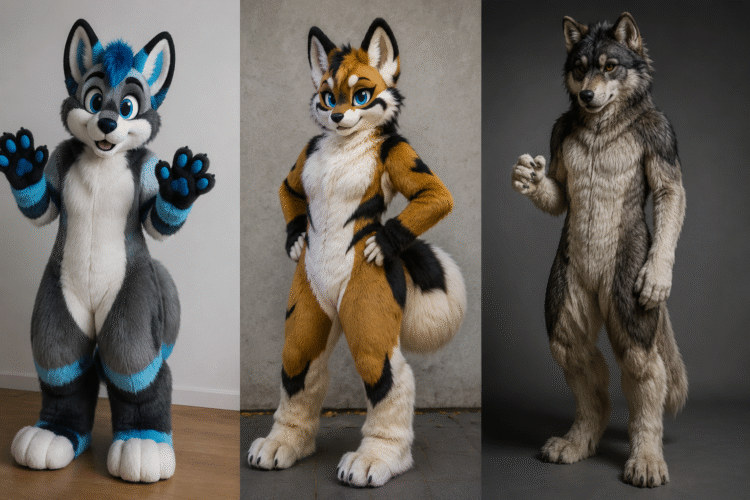
Realistic fursuits aim to look like actual animals. They use taxidermy style glass eyes, airbrushed fur to mimic natural markings, and careful shaping to replicate real anatomy. A well made realistic head can look startlingly lifelike.
Kemono fursuits sit in their own lane. They are not trying to look real. They are not trying to look like western cartoons either. The aesthetic comes directly from Japanese character design, where cuteness, softness, and big expressive eyes are the goal. A kemono head reads more like a 3D anime figure than either a cartoon or a real animal.
The simplest way to picture the difference: toony fursuits look like they walked out of a Saturday morning cartoon. Realistic fursuits look like they walked out of a wildlife documentary. Kemono fursuits look like they walked out of a Studio Ghibli film. Three completely different worlds, three completely different build approaches.
How Is a Kemono Fursuit Head Built?
The construction process shares some steps with other fursuit styles, but the materials and techniques diverge in a few key places.
Most kemono heads start with a resin or 3D printed base rather than carved foam. The reason is precision. Kemono eyes are large, smooth, and perfectly symmetrical, which is easier to achieve on a rigid base that was digitally modeled. Foam bases can work for kemono, but the smooth, even curves that define the style are difficult to get right by hand. Foam wants to go lumpy.
Getting both eye sockets perfectly symmetrical on a foam base takes a level of carving skill that even experienced toony makers find challenging when they switch to kemono for the first time. That is why most dedicated kemono makers default to 3D printed or resin cast bases.
The eyes are the most distinctive component. Instead of the mesh or resin “follow me” eyes used in toony fursuit heads, kemono eyes are solid acrylic or resin domes. The wearer does not see through the eyes at all. Vision comes through small gaps between the dome and the head shell, through hidden mesh panels cut into the cheeks, or through the open mouth area.
Suiters who have worn both styles consistently say the difference is dramatic. One TikTok fursuit maker put it simply: kemono dome eyes block a huge portion of your forward vision compared to mesh eyes, and you need to actively practice navigating in them before wearing the head in a crowd.
There is also the fogging issue. Because dome eyes are sealed, warm breath and body heat cause condensation on the inside of the acrylic. Experienced kemono makers install small fans inside the head to combat this, but even with a fan, fogging is something most kemono suiters learn to live with. Skyehigh Studios, one of the more established kemono makers, describes fogging as simply part of the kemono experience. It is not visible from the outside, but it can temporarily reduce the wearer’s already limited visibility from the inside.
Fur coverage on kemono heads is smooth and tight. This is where fur pile length becomes critical. Toony builds typically use long pile faux fur in the 1.5 to 2 inch range, which gives that fluffy, textured look. Kemono heads need short pile fur, usually half an inch or less. If you put long pile fur on a kemono head, the rounded silhouette disappears.
The clean curves get buried under fuzz, and the head starts looking puffy instead of smooth. Some makers shave longer fur down with pet clippers to get the exact length they need, but most kemono makers prefer to start with a short pile from the beginning. Shaving too short is a mistake you cannot undo. Once the backing starts showing through, that panel needs to be redone.
What Does a Kemono Fursuit Cost?
Kemono fursuits tend to cost about the same as other custom fursuit styles, sometimes slightly more because of the precision required on the eyes and the base. A kemono head from an experienced maker typically runs between $800 and $2,500, depending on complexity, materials, and the maker’s queue length.
A full fursuit in any style costs more than a head alone. If you are looking at a kemono fullbody suit, expect to start around $2,500 and go up from there. Prices vary widely across makers and regions. Always ask for a quote based on your specific character design rather than relying on general ranges.
One cost factor unique to kemono is cleaning. Because the acrylic dome eyes are not waterproof in the same way that mesh eyes on a toony head are, kemono heads cannot be washed the same way. Spot cleaning is the only safe option for a kemono head, which means you need to be more careful about sweat and wear. This does not change the purchase price, but it changes how much time you spend on maintenance over the life of the suit.
At Fursuit Mania, our custom heads start at $1,300 and we build primarily in a toony style. If your character has kemono influenced features, send us your reference sheet through our quote form and we will give you an honest answer about what we can and cannot do for your specific design.
Kemono vs Kig: Are They the Same Thing?
Not exactly. People sometimes use “kemono” and “kig” interchangeably, but they come from different traditions. We see this confusion regularly when customers message us describing what they want. Someone will ask for a “kemono head” but their reference sheet shows a human faced kig mask, or vice versa.
Kig (short for kigurumi) originally refers to Japanese performers who wear character costumes, often with smooth, mask like faces. Kig masks tend to have a human or doll like appearance with flat, painted features. They are common in Japanese stage performances and cosplay.
Kemono fursuit heads share some visual DNA with kig masks, especially the large dome eyes and smooth surfaces. But kemono heads are animal characters, not human characters. A kemono head looks like an anime fox. A kig mask looks like an anime girl. The construction techniques overlap, but the end result is different.
When you search for either term online, you will see some shops listing the same products under both names. That is partly a marketing decision and partly because the styles have been blending in recent years as more western makers experiment with Japanese influenced designs.
Is Kemono Style Right for Your Fursona?
Kemono works best for characters that have a cute, soft, anime inspired look. If your fursona has big round eyes and a small rounded face, kemono is a natural fit. It is especially popular for cat, dog, fox, and dragon characters with a chibi or stylized appearance.
If your character has a long muzzle, sharp angular features, or a realistic anatomy, kemono is probably not the right style. A western toony build or a realistic approach will serve that design better.
Here is an honest take on the visibility question, because it matters for your buying decision. The dome eyes on a kemono head look incredible from the outside, but they create a noticeably harder suiting experience compared to mesh eye toony heads. Multiple professional kemono makers, including Skyehigh Studios, explicitly state that kemono fursuits are not recommended for first time fursuit owners. The combination of limited vision, fogging, and reduced airflow means kemono suiting takes practice. If this is your first suit and you plan to wear it at busy conventions, a toony head with mesh eyes will give you a much better experience while you learn how to navigate, interact, and manage heat in a suit. You can always commission a kemono head later once you are comfortable suiting.
Kemono is a style choice, not a quality level. A well made kemono head and a well made toony head take the same amount of skill and time to build. The right style is the one that matches your character, your experience level, and how you plan to use it.
Frequently Asked Questions
What is a kemono fursuit?
A kemono fursuit is a costume styled after Japanese anime and manga characters. It features oversized dome eyes, a short rounded muzzle, and soft facial curves. The word kemono comes from the Japanese word for animal. This style has become increasingly popular in the global furry community for its cute, expressive appearance.
How much does a kemono fursuit head cost?
A custom kemono fursuit head typically costs between $800 and $2,500 depending on the maker, the complexity of the design, and the materials used. Dome eyes, resin bases, and detailed airbrushing can push prices toward the higher end. Always request a quote based on your specific reference sheet to get an accurate number.
Can I see out of a kemono fursuit head?
Yes, but visibility is significantly more limited than in a toony or realistic head. Kemono heads use solid acrylic dome eyes that you cannot see through. Vision comes from gaps around the domes, hidden mesh panels in the cheeks, or through the mouth opening. Fogging on the inside of the domes is also common, especially in warm or humid environments. Most kemono suiters recommend having a handler with you at crowded events.
Is kemono the same as kigurumi?
No. Kemono refers to animal characters styled in a Japanese anime aesthetic. Kigurumi refers to Japanese performer costumes that often feature human or doll like faces. The styles share construction techniques and some visual similarities, especially the dome eyes, but they represent different character types. Kemono heads are animals. Kig masks are typically human faced.
Are kemono fursuits good for beginners?
Most experienced makers and suiters recommend starting with a toony or partial fursuit before moving to kemono. The limited visibility, fogging, reduced airflow, and spot clean only maintenance make kemono heads more demanding to wear and care for than western toony heads with mesh eyes and open ventilation. Kemono is a beautiful style, but it rewards experience.