
August 4, 2026
What Is a Protogen Fursuit?
By Casey Wren
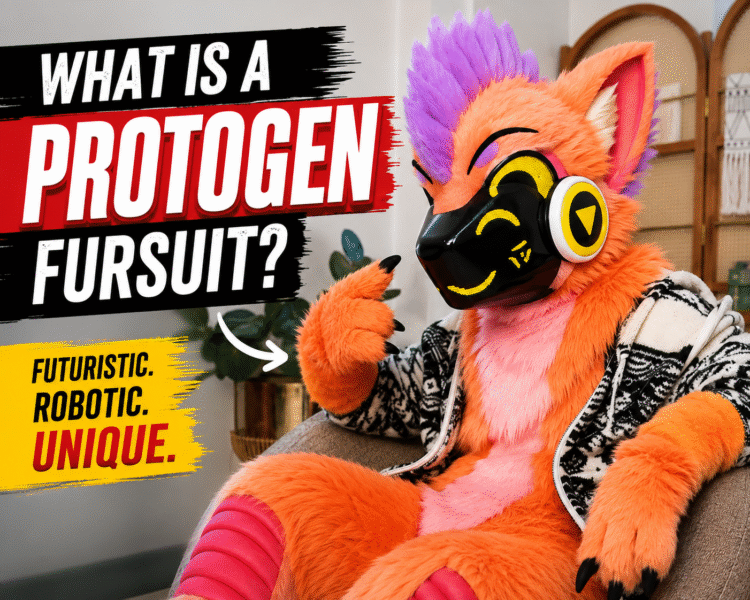
A protogen fursuit is a fursuit based on a fictional cyborg species. The character is part animal, part machine. Roughly 60% biological and 40% mechanical according to the species lore. The feature that makes a protogen instantly recognizable is the visor. Instead of a sculpted fur muzzle with eyes and a nose, a protogen has a smooth electronic faceplate that displays animated eyes and expressions.
The species was created by artist Malice Risu (also known as Cedar Andrews) on Fur Affinity in April 2017. It started as a more accessible spin off of an earlier species called the Primagen. Where primagens are mostly machine with some animal features, protogens lean the other way: mostly animal with cybernetic enhancements. That balance between organic fur and hard edged technology is what makes them so popular in the fandom and so complex to build as real fursuits.
Protogen fursuits have become one of the fastest growing styles in the community. They stand out at conventions instantly. The glowing visor, armor plating, and tech aesthetic read as “cyber creature” rather than “cartoon animal,” and they photograph dramatically under convention lighting. Building one requires a maker who understands both traditional fursuit construction and electronics, which is why protogen commissions cost more and take longer than most other styles.
What Makes a Protogen Fursuit Different from a Regular Fursuit?
A traditional fursuit head is made from carved foam or a 3D printed base, covered in faux fur, with mesh or resin eyes and a sculpted nose and mouth. A toony fursuit head like the ones we build at Fursuit Mania uses follow me eyes, open ventilation through the nose and mouth, and breathable sports fabric lining. You see through the mesh in the eyes. You breathe through carved channels in the foam.
A protogen head replaces all of that with a rigid helmet shell and a visor. The visor is either a static tinted panel with eye cutouts behind mesh, or a fully programmable LED matrix that displays moving expressions. The helmet is typically 3D printed or built from a resin shell rather than carved foam. Inside, there are wires, a microcontroller, battery packs, and one or more fans.
Beyond the head, protogen fursuits usually include armor panels on the chest, shoulders, and thighs made from EVA foam, vacuum formed plastic, or 3D printed parts. The fur tends to be shorter pile than traditional suits, often in grayscale or muted tones with neon accents and circuit inspired patterns. Many protogen builds use digitigrade leg padding to complete the sci fi silhouette.
The result is a suit that blends soft fur with hard geometry. That contrast between organic and mechanical is the entire point of the species design.
Two Types of Protogen Visors
The visor is the most important decision in a protogen commission. There are two main approaches, and they are very different in cost, complexity, and performance.
Static visors are tinted plastic panels, often vacuum formed over a 3D printed buck. The eyes are either painted onto the surface, printed as a decal, or cut out with mesh behind them for vision. Static visors are simpler to build, lighter, more affordable, and easier to maintain. You can see through them like a traditional fursuit head (through mesh or cutouts), and they do not require batteries, wiring, or programming. A static visor protogen head is the budget friendly entry point to the species.
LED visors use programmable LED matrices to display animated eyes and expressions on the visor surface. The most common setups use either MAX7219 8×8 dot matrix panels (single color, lower cost, limited expression range) or HUB75 flexible LED panels (full color, higher resolution, more expression options). The LEDs are controlled by a microcontroller like an Arduino, powered by rechargeable lithium battery packs, and programmed with a set of preset expressions the wearer can cycle through using a remote or a phone app.
LED visors are what most people picture when they think of a protogen fursuit. The animated face draws attention from across a convention hall. But they come with real trade offs. The electronics add weight to the front of the head, which pulls on your neck over time. The sealed visor traps heat more than an open mesh or foam head. Batteries need to be charged before every outing and monitored during wear. And visibility is more restricted because you are looking through small gaps around the LED panels, not through wide mesh eyes.
How Much Does a Protogen Fursuit Cost?
Protogen fursuits are among the most expensive fursuit styles because they combine traditional fursuit making with electronics, armor fabrication, and programming. Here is what the current market looks like.
A static visor protogen head from a newer maker can start as low as $350 to $800, depending on quality and materials. LED protogen heads from established studios typically run $1,800 to $2,500. Arget and Lazuli, a respected protogen focused studio in the Czech Republic, starts their protogen heads at roughly $2,500. AtomicFursuits prices their LED protogen heads at around $1,800 with a MAX7219 face, 12v fan, and a 50 watt hour battery pack.
A complete protogen fullbody suit with armor, LED visor, digitigrade legs, and all electronics can run $5,000 to $8,000 or more depending on the maker. AtomicFursuits prices their complete protogen armor system (chest, shoulders, hips, 200 watt hour battery, WLED app controlled LEDs, fan, and microphone) at around $6,000 before adding the fur bodysuit and other parts.
For comparison, a traditional toony fursuit head starts at $1,300 and a fullbody digitigrade suit starts at $3,300 at Fursuit Mania. The electronics, armor, and specialized skills required for protogen builds push prices significantly higher.
What Is It Like to Wear a Protogen Fursuit?
Wearing a protogen feels different from a traditional fursuit from the moment you pick up the head. The head is heavier. The visor gives it a solid, mechanical weight that feels more like a helmet than a fursuit head. Experienced protogen suiters describe the contrast: the body is soft fur and foam padding, but the head encloses you in rigid structure.
Visibility depends entirely on the visor type. A static visor with mesh eye cutouts gives roughly the same field of view as a traditional fursuit head. An LED visor is more restricted. You see through small gaps around the panel edges, through hidden mesh in the jawline, or through openings in the lower visor. One TikTok fursuit maker described their protogen vision as noticeably worse than a standard fursuit head, and they stopped wearing theirs as often because of it.
Ventilation is a constant challenge. A traditional fursuit head lets air flow through the open nose and mouth area, through the eye mesh, and through gaps in the fur. A protogen visor is more sealed. Makers add hidden vents along the jawline and mount small fans inside the shell to circulate air, but a protogen head still runs hotter than a mesh eyed toony head. Most protogen suiters say they need more frequent breaks than they expected.
Weight distribution matters more on a protogen than any other fursuit style. A front heavy visor and battery packs can pull at your neck after an hour of wear. Good makers balance the electronics carefully: batteries mounted toward the back of the head, LED panels kept as light as possible, and interior foam padding shaped to distribute the load evenly. If the balance is off, your neck and shoulders will tell you.
Is Protogen an Open or Closed Species?
Protogen is an open species. That means anyone can create a protogen character without paying for a license or getting permission from the original creator. Common and uncommon protogen designs are completely free to make.
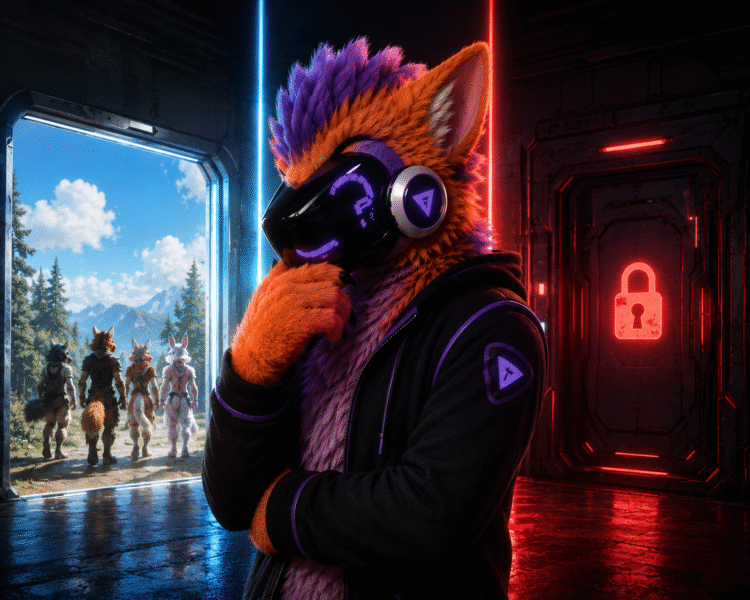
There are some design rules. Standard protogens have a single pair of ears, one pair of eyes on the visor, no wings, and no extra limbs beyond the standard two arms and two legs. Rare protogen variants (with wings, multiple sets of ears, or extra limbs) are restricted and were originally sold through official auctions by the species creator.
In practice, a large portion of the community creates protogen characters that do not strictly follow the official guidelines, and there are no real enforcement mechanisms for this. The species has evolved well beyond its original ruleset, with makers and artists regularly producing designs that bend or ignore the restrictions on rare features.
What Is the Difference Between a Protogen and a Primagen?
People mix these up constantly. They are related but not the same.
The primagen came first, created in 2015. It is a closed species, meaning you can only obtain one by purchasing it from the original creator through official auctions. Primagens are more machine than animal. They have longer, more angular visors, fewer biological features, and a design that reads as mostly robotic.
The protogen was created in 2017 as a more accessible version. It is open to anyone. Protogens have more biological features (fur covering most of the body, animal ears, a biological tail), a shorter and rounder visor, and a design that reads as more animal with tech enhancements rather than a robot with some animal features.
For fursuit purposes, the distinction matters mainly in character design. If you are designing a protogen fursona for a commission, the standard open species rules give you plenty of room for creativity without worrying about species restrictions.
Is a Protogen Good for a First Fursuit?
It depends on what type of protogen build you are considering.
A static visor protogen partial (head, paws, tail, no electronics beyond basic LEDs in the cheeks) can be a manageable first suit. The wearing experience is similar to a traditional partial, the maintenance is straightforward, and the cost is comparable to other fursuit styles.
A full LED protogen with animated visor, armor, and electronics is a different story. Experienced makers and suiters generally recommend getting comfortable in a simpler suit first before committing to a protogen build. The limited visibility, extra weight, heat management, battery monitoring, and delicate electronics all add complexity that a first time suiter may find overwhelming at a busy convention.
If your fursona is a protogen and you want to start suiting sooner rather than later, consider a static visor partial as your first build. You get the protogen look without the full electronic complexity. You can always upgrade to an LED visor or commission a full animatronic head later once you know how you like suiting.
At Fursuit Mania, we specialize in toony style fursuit heads and suits. We do not currently offer protogen visor builds, but if your protogen character has elements we can help with (the furry body, digitigrade legs, paws, tail, or a toony influenced head design), send your reference sheet and we will let you know what we can do.
Caring for a Protogen Fursuit
Protogen suits need all the same care as traditional fursuits plus extra attention to the electronics.
The fur body, paws, and tail follow standard care: brush regularly with a wire pet brush, spot clean or hand wash, air dry completely before storing. Never store a damp suit in a closed container.
The head requires a different routine. After every wear, wipe down the interior padding, check all wiring connections, and let the fans air out fully before sealing anything. The visor surface shows fingerprints and fine scratches easily, so most protogen owners wrap the head in soft fabric and store it in a padded case. Do not submerge a protogen head in water. The electronics, batteries, and wiring are not waterproof. Spot cleaning the interior with a damp cloth and mild soap is the safest approach.
Battery maintenance matters. Charge batteries fully before each outing. Do not store lithium batteries fully depleted for extended periods. Check the battery monitoring system before each wear to make sure you have enough power for your planned session. Running out of power mid convention means your visor goes dark, which is not dangerous but it is disappointing.
Frequently Asked Questions
What is a protogen fursuit?
A protogen fursuit is a costume based on a fictional cyborg species that is part animal and part machine. The defining feature is a visor faceplate that replaces the traditional muzzle. The visor is either a static tinted panel or a programmable LED matrix that displays animated expressions. Protogen fursuits also typically include armor panels and use shorter pile fur in cybernetic patterns.
How much does a protogen fursuit cost?
A static visor protogen head starts between $350 and $800 from newer makers. LED protogen heads from established studios run $1,800 to $2,500. A complete protogen fullbody suit with armor, LED visor, and all electronics costs $5,000 to $8,000 or more. The electronics, armor fabrication, and programming add significantly to the cost compared to traditional fursuit styles.
Is a protogen an open species?
Yes. Protogen is an open species, which means anyone can create a protogen character for free. Common and uncommon variants require no license or permission. Only rare variants (with wings, extra limbs, or three sets of ears) have design restrictions. In practice, the community creates a wide range of protogen designs beyond the official guidelines.
What is the difference between a protogen and a primagen?
The primagen was created in 2015 and is a closed species (available only through official auctions). It is more machine than animal with a long angular visor. The protogen was created in 2017 as an open species accessible to everyone. Protogens are more animal than machine, with fur covering most of the body, biological ears, and a shorter rounded visor.
Are protogen fursuits good for beginners?
A static visor protogen partial can work as a first suit. A full LED protogen with animated visor, armor, and electronics is better suited to experienced suiters. The limited visibility, extra weight, heat buildup, and electronics maintenance add complexity that first time suiters may find challenging at busy conventions.